High-Low Hydraulic Power Pack Manufacturer
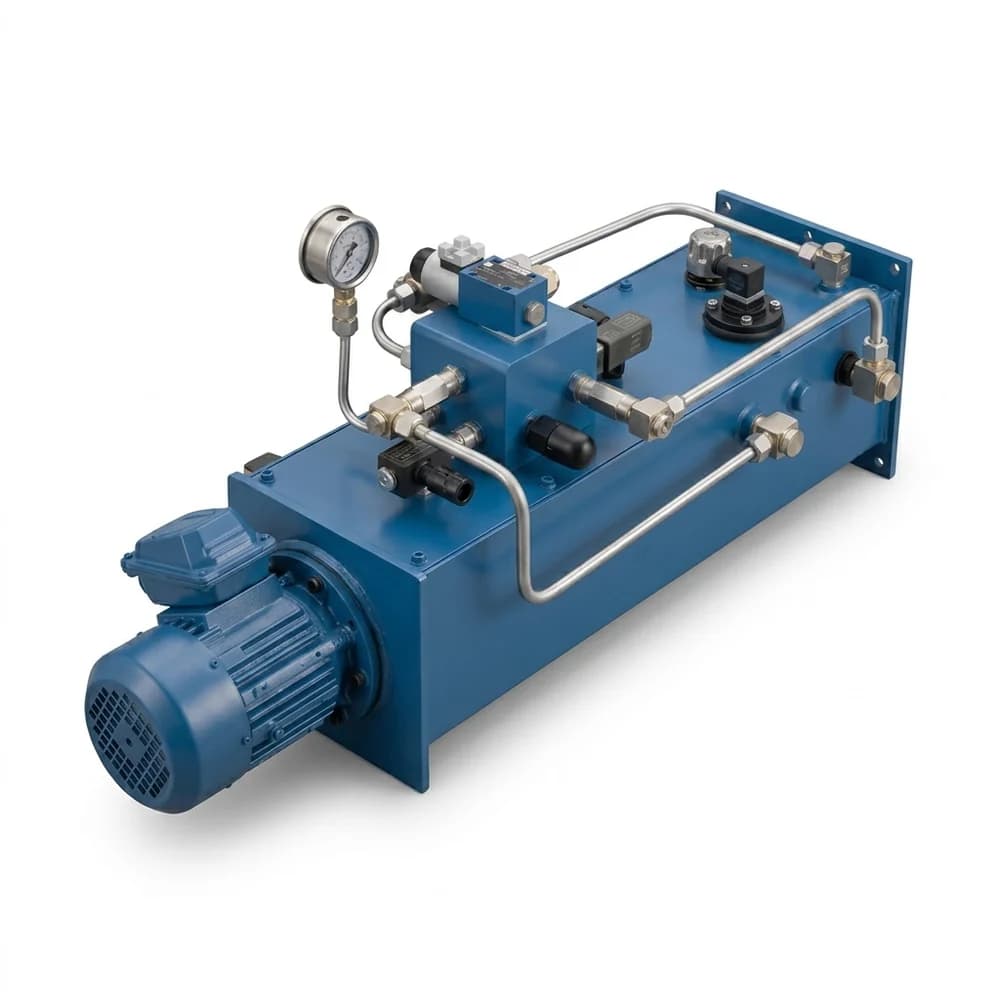
Dual-stage pumping. Extreme efficiency. As a highly specialized High-Low Hydraulic Power Pack Manufacturer, Honeywell Hydraulics engineers advanced dual-pump fluid power systems designed exclusively to optimize industrial production cycles. By intelligently combining a high-flow approach stage with a high-pressure working stage, our High-Low units drastically reduce cycle times and cut electrical motor requirements by up to 50%.
High-Low Hydraulic Circuit Fundamentals
Before specifying a High-Low power pack for your factory, it is critical to understand the physics of dual-stage pumping and why it is vastly superior to a standard single-pump unit for any machine that features a long approach stroke followed by a short, high-pressure working stroke.
A High-Low (or Hi-Lo) circuit utilizes two separate hydraulic pumps driven by a single electric motor. A large High-Flow / Low-Pressure gear pump provides massive fluid volume to move the cylinder quickly toward the workpiece. A much smaller Low-Flow / High-Pressure pump takes over the millisecond the cylinder touches the workpiece and begins pressing.
The heart of this system is the Unloading Valve. The instant the cylinder touches the metal and pressure spikes, the unloading valve automatically opens. It dumps all the oil from the large high-flow pump effortlessly back into the tank at near-zero pressure. Now, the electric motor only has to drive the tiny high-pressure pump, completely preventing the motor from stalling and drastically reducing heat generation.
Typical High-Low Dual-Stage Flow
How an unloading valve dynamically manages two pumps on a single motor shaft:
Engineering Tip
A High-Low hydraulic circuit must be tuned so the unloading valve switches at the exact appropriate pressure for the application. If the unloading pressure is set too low, the large pump drops offline prematurely, slowing down the approach speed. If set too high, the electric motor will momentarily overload and stall before the valve unloads. Always calibrate the unloading valve under actual production load.
Core Engineering Advantages
Why do production managers insist on dual-stage pumping? Maximum output with minimum energy waste.
50% Motor Size Reduction
By isolating the high flow from the high pressure, you can often cut the required electric motor horsepower in half compared to a single-pump design.
Drastic Cycle Time Reduction
The high-flow pump eliminates "dead air" time by rocketing the cylinder toward the workpiece at maximum speed before shifting to pressing force.
Zero-Heat Unloading
During the pressing phase, the massive flow of the large pump is dumped directly to tank at zero pressure, meaning it generates absolutely no heat.
Seamless Pressure Transition
Integrated check valves ensure that when the large pump unloads, the high pressure is instantly maintained by the small pump without a drop in force.
High-Low System Parameters
We engineer advanced dual-stage power units designed exclusively for high-speed industrial pressing and forming.
Dual-Stage Specifications
| Parameter | Value |
|---|---|
| Pump Configuration | Tandem Mounted (High-Flow Vane/Gear + Low-Flow Piston) |
| Unloading Valve | Cartridge style, internally piloted, externally adjustable |
| High-Flow Stage | Typically 30 to 150+ LPM @ 20 to 50 Bar (Approach) |
| High-Pressure Stage | Typically 2 to 15 LPM @ 200 to 350+ Bar (Pressing) |
| Manifold Integration | Common central block prevents internal back-feeding |
| Electric Motor | 3-Phase AC, sized exclusively for the high-pressure phase |
| Cooling Requirement | Massively reduced due to zero-pressure unloading |
| Cycle Automation | Fully compatible with PLC proportional control |
High-Low vs. Standard Power Pack
Why single-pump standard units are completely obsolete for high-speed pressing applications.
| Feature | High-Low Power Pack | Standard Power Pack (Single) |
|---|---|---|
| Pump Arrangement | Dual Stage (High-Flow & Low-Flow) | Single Stage (One pump for all phases) |
| Flow Rate | Variable (Fast approach, slow press) | Constant (Same speed for approach and press) |
| Pressure Stage | Automatically shifts to high pressure | Must push all flow to high pressure |
| Cycle Speed | Extremely Fast (Optimized for production) | Slower (Unless heavily overpowered) |
| Heat Generation | Very Low (Large pump unloads to tank) | Very High (Dumps massive flow over relief) |
| Motor Size | Highly Optimized (Often 50% smaller) | Massive (Sized for Max Flow + Max Pressure) |
| Energy Efficiency | Excellent (Uses power only when needed) | Poor (Wastes massive energy as heat) |
| Unloading Valve | Mandatory (Heart of the system) | Not required |
| Productivity | Maximum parts per hour | Standard parts per hour |
| Maintenance | Requires valve calibration | Simple operation |
| Initial Cost | Higher (Requires two pumps & smart valving) | Lower |
| Industrial Suitability | Hydraulic Presses, Forging, Molding | Basic lifting, continuous slow pushing |
Common Dual-Stage Applications
High-Low circuits are mandatory for any application requiring a long fast stroke followed by a short high-pressure squeeze.
Hydraulic Presses
Achieves rapid tooling approach while maintaining immense, energy-efficient high-pressure pressing force.
Compression Molding
Significantly reduces cycle times while cutting electrical energy consumption during the long curing phase.
Deep Drawing Machines
Allows for rapid positioning followed by a smooth, highly controlled transition to high-pressure metal forming.
Heavy Forging Equipment
Delivers extreme high-tonnage squeezing force without overheating the hydraulic oil during continuous production.
Engineering Guide: Selecting a High-Low Power Pack
ATypical Design Inputs (Prerequisites)
1. Cylinder bore & stroke 2. Approach distance vs Working distance 3. Required tonnage (Max Pressure) 4. Cycle frequency (Parts per min) 5. Available electrical supply.
BCalculating Motor Sizing
Calculate motor size twice: 1) Combined Flow × Unloading Pressure. 2) Low Flow × Maximum Pressing Pressure. Select the motor based on whichever yields the higher wattage.
CCycle Optimization (Speed)
To minimize cycle times, analyze the "dead air" distance your cylinder travels. We size the high-flow pump exclusively to eliminate this dead time. Faster approach = more parts per hour.
DMaintenance Snapshot
DAILY: Check for abnormal pump cavitation noise. WEEKLY: Observe unloading valve crispness. MONTHLY: Inspect return filters (dirty filters cause cavitation). QUARTERLY: Recalibrate unloading valve.
Manufacturing: Advanced Dual-Pump Assembly
Building a High-Low power pack requires precision shaft alignment and flawless manifold engineering.
Dual-Pump Shaft Alignment
We mount both pumps in tandem on a single electric motor shaft using precision bell housings. Absolute axial alignment is mandatory; misalignment destroys bearings due to harmonic vibrations.
Common Manifold CNC Machining
We machine a massive central manifold block where the unloading valve, check valves, and relief valves are integrated as cartridges, completely eliminating messy external hoses and pressure drops.
Cycle Simulation FAT
During Factory Acceptance Testing, we simulate the exact production cycle using a load-simulating valve. We meticulously calibrate the unloading valve to switch at the precise pressure requested.
Unloading Verification
We verify that when the unloading valve shifts, the high-flow pump is dumping to tank at near-zero pressure, proving maximum energy efficiency without electric motor overloading.
Is Your Press Wasting Energy?
Retrofitting a slow, single-pump press with a High-Low unit is the fastest way to double production speed.
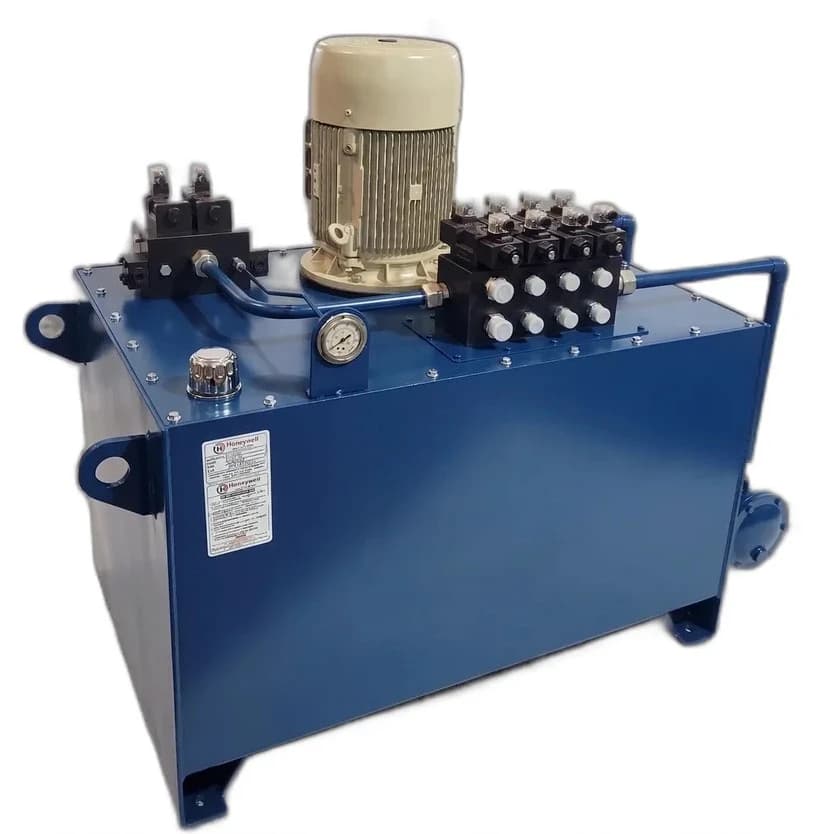
Power Packs for Presses
Heavy-duty hydraulic power units engineered specifically for industrial metal forming machines.
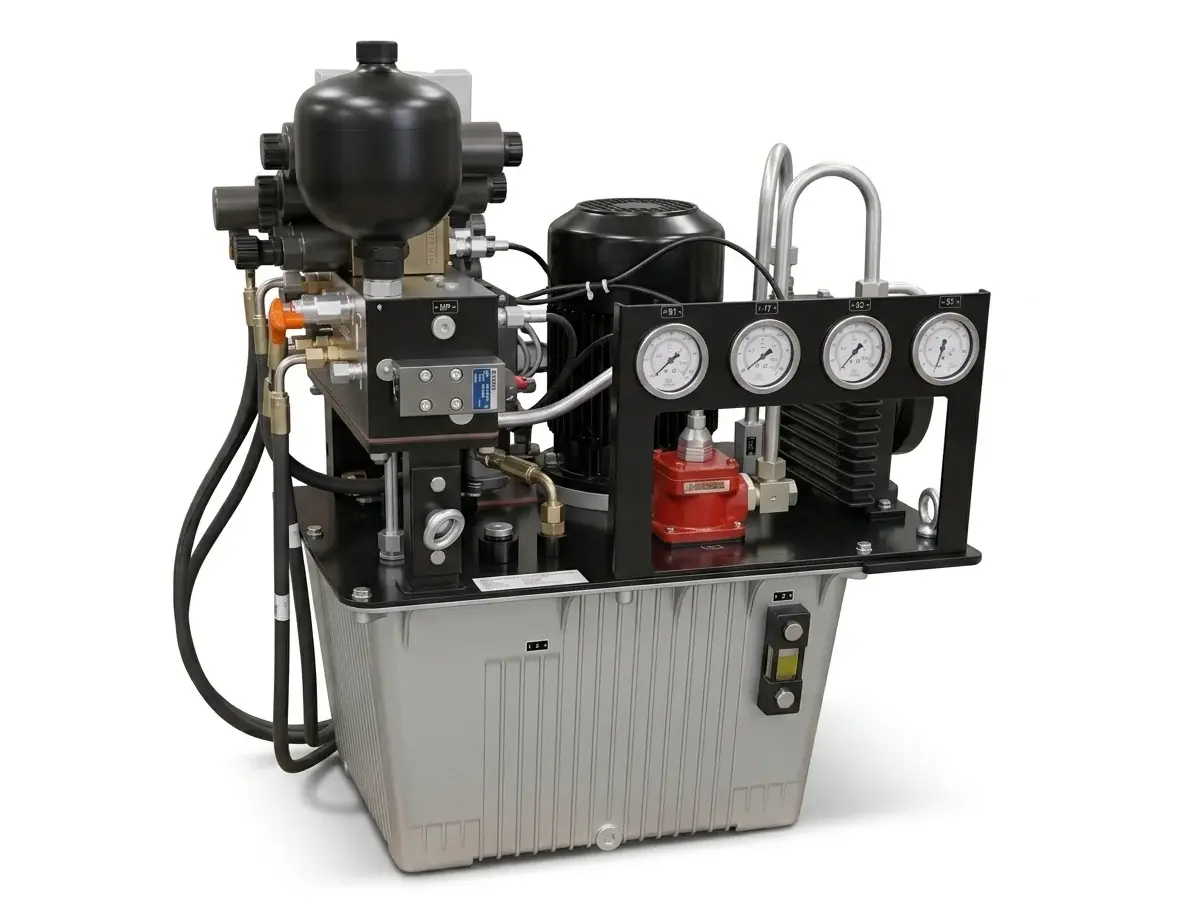
Accumulator Power Packs
Nitrogen-charged systems that can be paired with High-Low circuits for ultimate energy savings.
Customized Power Packs
Bespoke turnkey fluid power systems engineered specifically for complex OEM machinery.
Factory Direct Supply of High-Low Units Across India
Honeywell High-Low Units are manufactured at our ISO-certified facility in Ahmedabad, Gujarat. We supply directly to OEMs, machine builders, and industries across India with reliable factory-direct delivery and custom engineering support.
Our manufacturing headquarters in Gujarat. Factory-direct supply of high-performance hydraulic cylinders and power packs.
Key Industries
Fast delivery of hydraulic solutions to Pune, Mumbai, and major MIDC industrial zones across the state.
Key Industries
Serving Indore, Pithampur, Sanwer Road, and major industrial hubs with precision hydraulic cylinders and system solutions.
Key Industries
Custom hydraulic solutions for heavy engineering, steel, and mining industries across Kolkata, Durgapur, and Haldia.
Key Industries
Pan-Rajasthan supply of custom hydraulic cylinders and power packs to major RIICO industrial areas like Bhiwadi and Neemrana.
Key Industries
Nationwide delivery of hydraulic equipment to all major industrial cities across India.
Key Industries
Frequently Asked Questions
Find answers to common questions about our custom hydraulic cylinder manufacturing process and capabilities.
Still have questions?
Our engineering team is ready to discuss your specific hydraulic requirements.
Is Your Press Wasting Energy?
Stop wasting electrical energy and suffering from slow production cycles. Partner with Honeywell Hydraulics to engineer an advanced High-Low Power Pack that maximizes your machine's output.